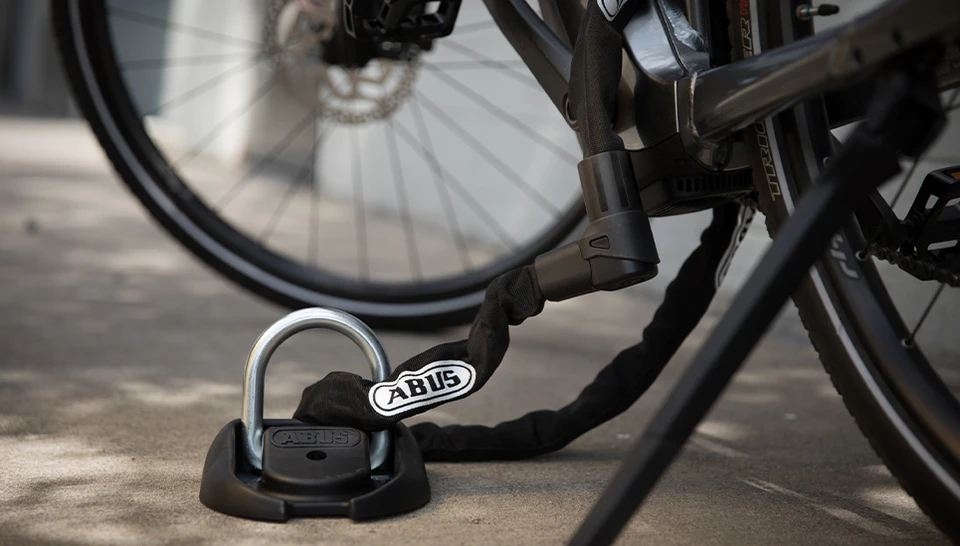
YARDO 7807F/85 chain lock attached to a bicycle © ABUS

LOCK YOUR BICYCLE

How do I lock my bicycle properly?

In this guide, you will learn everything you need to know about securing your bicycle, from choosing the right lock and finding safe parking spaces to effective behaviour in the event of theft.

Infinity Loop 1806/140 chain lock wrapped around two bicycles © ABUS
Folding lock 6200K wrapped around a bicycle for locking © ABUS
Person öffnet das Kettenschloss YARDO 7807F mit dem Fingersensor am Fahrrad angeschlossen © ABUS

Securely lock your bicycle:

How and where?

Only securely locked bicycles can protect against theft.

Why is it so important to lock your bike properly? A well-secured bike deter thieves and makes theft a time-consuming and risky business. An inadequately secured bike, on the other hand, is an easy target. It is therefore worth investing time and effort in reliable anti-theft protection.

Whether in a small town or a big city, bicycle theft is unfortunately a widespread crime. This is often because bicycles are easy to transport or are not adequately secured with a lock. Around 260,000 bicycles are stolen in Germany every year. The actual number is probably even higher, as not all thefts are reported. This highlights the need to take effective measures to protect your bicycle and keep it safe from thieves.

Securely locking your bicycle starts with choosing the right bicycle lock. The material and type of bicycle lock can determine whether a potential thief will attempt to break the lock or shy away from doing so.

There are different types of bicycle locks, which vary in terms of security and handling.

These include the following lock types:

Very secure due to their rigid construction, but less flexible.

GRANIT™ Super Extreme 2500 U-lock attached to a bicycle © ABUS

Offer high security and flexibility, but are often heavy.

Two bicycles locked together with the YARNIT chain lock © ABUS

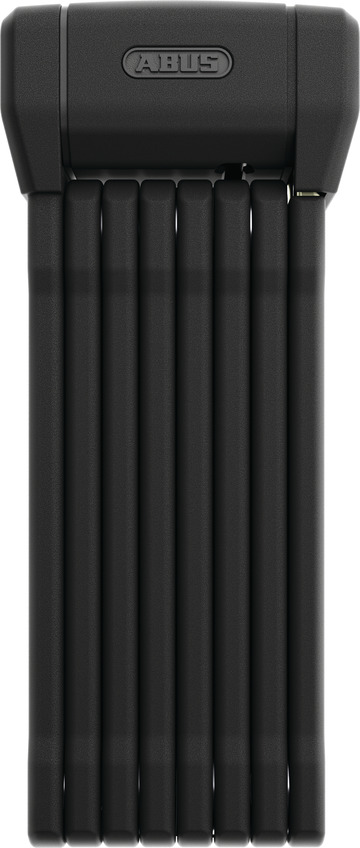
Combine safety and flexibility, can be stored compactly.

Folding lock 6200K wrapped around a bicycle for locking © ABUS

Lightweight and flexible, but offer less security and are easier to cut through with bolt cutters.

Bicycle locked in beach area with Tresor 6412 cable lock © ABUS

Advantages and disadvantages of different types of locks

Not all bicycle locks are the same. Each lock has its own characteristics, advantages and disadvantages. Before making a purchase, consider what level of security you want for your bicycle and which lock best suits your needs and riding habits.

  1. Material : High-quality materials such as hardened steel offer better protection than thin materials that are easy to cut through.
  2. Security level Pay attention to safety certification, which should ideally have been confirmed by independent testing institutes.
  3. Weight : A heavy lock usually provides better protection, but is less practical. Find a compromise that suits your needs.
  4. Handling : The lock should be easy to use and transport.

It is not only the lock that is important for securing your bicycle properly, but also how you use the lock. To effectively secure your bicycle and protect it from theft, you should therefore use the correct technique. Always lock the frame and at least one wheel to a fixed object. Ideally, you should secure both the front and rear wheels with a lock. Make sure that the object to which you are locking your bicycle is firmly anchored and cannot be removed without considerable effort.

Second lock for added security

Using two different types of locks further increases security, as potential bicycle thieves will need more time and different tools to break both locks. Is your bicycle equipped with a built-in lock on the frame that prevents the wheels from moving? If so, lock this as well to make it more difficult to remove your bicycle.

If your bicycle has valuable parts such as a custom-made saddle or a removable bicycle basket, secure these bicycle parts with additional locks or special security devices. Alternatively, you can remove these parts and reattach them to your bike later. The same applies to your bicycle helmet. Secure it either by attaching it to your bike with a lock or carry it with you when you are not using your bike.

  1. Secure the frame and at least one wheel
  2. Attach to firmly anchored objects
  3. Use two locks for added security
  4. Secure loose parts such as the saddle, basket or helmet


Avoid mistakes: Securing only the front wheel is not enough. Attaching the lock loosely to the frame also offers little protection.

Not only the lock, but also the location is crucial.

  • Prefer well-lit, busy places.
  • Use cameras/monitored facilities (car parks, lock-up garages).
  • Proximity to entrances/shops/stations.
  • At home: hallway, balcony, garage, basement – if they can be securely locked.
  • Avoid: dark corners, backyards, blind spots.
Two bicycles locked side by side at a jetty with the YARNIT chain lock © ABUS

The answer is: Yes.

As long as the bicycle does not obstruct traffic, it may be locked to lampposts or fences – this also applies in pedestrian zones, by the way.

Infinity Loop 1806 chain lock locked to a yellow bicycle around a lamppost © ABUS

Conclusion:

Avoid dark, secluded corners and places where people do not regularly pass by. Such parking spaces offer thieves ideal conditions to work undisturbed.

Busy places with easily visible public bicycle racks are the ideal place to park your bicycle.

Additional tips against bicycle thieves

In addition to parking your bicycle in the ideal location and properly securing your bicycle helmet and other important parts to the bicycle, there are other measures you can take to reduce the risk of theft or limit any damage.

These include the following:

  • Be on the lookout for suspicious behaviour, such as people lingering unusually long near bicycle racks or carrying tools such as bolt cutters. Report any suspicious observations to the police or security personnel.
  • GPS trackers can help locate a stolen bicycle. Other security gadgets include alarm systems for bicycles or our locks with built-in alarm systems.
  • Bicycle insurance can cover the financial loss in the event of theft. Check the terms and conditions of your household insurance or take out special bicycle insurance.

Registered and coded bicycles can be more easily identified and returned by the police in the event of theft. The registration number helps to identify the rightful owner. In addition, such measures can serve as an additional deterrent to thieves.

Where and how you can register or code your bicycle:

  • Police: Many police stations offer bicycle registration and coding services.
  • Bicycle dealers: Some bicycle dealers also offer this service.
  • Online databases: There are online databases where you can register your bicycle.

To ensure that your bicycle lock continues to function reliably in the long term, you should make sure that it is always in good condition. Clean your lock regularly and lubricate the locking mechanism with a suitable lubricant to ensure that it works smoothly. Check the lock regularly for wear or damage, as a damaged lock offers less protection and should be replaced without fail. When not in use, store your lock in a dry place and protect it from the elements to prevent rusting. Rust attacks the material of the lock and makes it porous over time.

Parking and locking your bicycle securely: important tips at a glance

Locking your bicycle correctly is essential to protect it from theft. Choosing the right lock, behaving correctly and knowing where to park your bicycle safely are key factors in keeping it secure. In addition, registering your bicycle and using modern technology can greatly increase the chances of recovering it in the event of theft.

  • Use a high-quality lock (e.g. U-lock, chain lock or folding lock).
  • Lock the frame and at least one wheel to a fixed object (wall anchor, lamppost, bicycle rack, etc.).
  • Choose well-lit and busy parking locations.
  • Buy a second lock and ideally use two different types of lock.
  • When locking up your bike, also secure your bike helmet and other individual parts such as baskets or wheels.
  • Take care of your lock and check it regularly for damage.
  • Register and code your bicycle.
  • In the event of theft: report it to the police and your insurance company and use online databases to recover it.

These measures can significantly reduce the risk of your bicycle being stolen. Always bear in mind that bicycle safety is not just a question of technology, but also of behaviour. Stay alert and actively protect your bicycle so that you can enjoy it for a long time to come.

Loading ...